

Futures contracts are leveraged exchange-traded financial instruments that enable traders to profit from moves in the underlying market. Scalping futures is an exciting (but risky) trading strategy that delivers near-instant feedback on your trading ability. As an investor, you should be aware of the ins and outs of futures scalping strategies.
What Is The Scalp Trading Strategy
Scalping is a short-term trading strategy where scalpers exit a trade quickly after entry, often aiming for a small profit on each trade and high frequency to reach larger profits. Scalpers must consider commissions on these trades, as they can add up quickly. To scalp, an extremely fast internet connection and a reputable, well-regulated futures broker or prop firm are essential. Scalpers also increase the size of their positions taken, as futures are leveraged instruments, allowing them to control a position in the underlying asset with less money than its notional amount. Traders with small accounts or those seeking more exposure can trade futures on margin.
Scalping can be done on all types of futures, but commissions and dealing spreads can determine its suitability for traders. Futures contracts listed on a particular exchange typically trade with the same rules, regardless of the underlying asset. Many futures market scalpers prefer trading only contracts on familiar underlying assets, while some technical traders may scan futures markets for advantageous setups.
To determine the best futures scalping strategy, consider your factors such as personality and risk tolerance.
The Top Futures Scalping Techniques
Breakout Trading
A breakout happens when an asset’s price swings outside of a preset range of resistance or support. The scalper thinks there is enough momentum behind the push to “tick” (movement in the futures market is measured in ticks) the price up or down long enough to enter the market and then depart profitably.
Good breakout trades typically, but not always, have the following characteristics:
- Numerous taps at a support or resistance price.
- A considerable increase in volatility on the breakout follows contracting volatility.
- Higher trading volume during the breakout.
Range Trading
Traders who trade index futures, such as the popular S&P 500 E-mini and Micro E-mini, are usually seeking assets with medium volatility. Moderate volatility allows scalpers to avoid unexpected and significant movements up or down. Furthermore, scalping in the middle of a trend that you believe you can rely on allows you to more accurately estimate the market’s path.
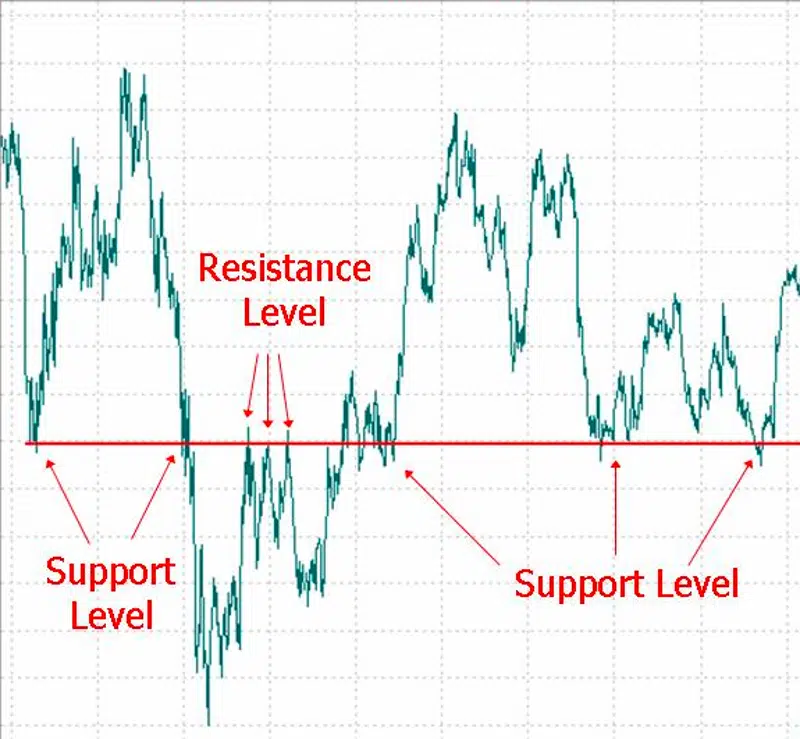
When trading a range, you first determine a set of support and resistance levels. Support levels are low points that appear to form a price floor. Resistance levels are values that an asset cannot seem to break above without significant effort.
Once you’ve discovered the support and resistance levels that define a trading range, simply purchase near support and sell near resistance. You can do this until a breakout occurs, at which point you should wait for new support and resistance levels to emerge to build a new trading range.
Bollinger Bands: Technical Indicator Trading
Bollinger Bands are envelopes entailing two standard deviations above and below the price’s basic moving average.
Together with a graph of the moving average on which they are based, they form a “roadmap” for traders to employ when implementing the scalping method.
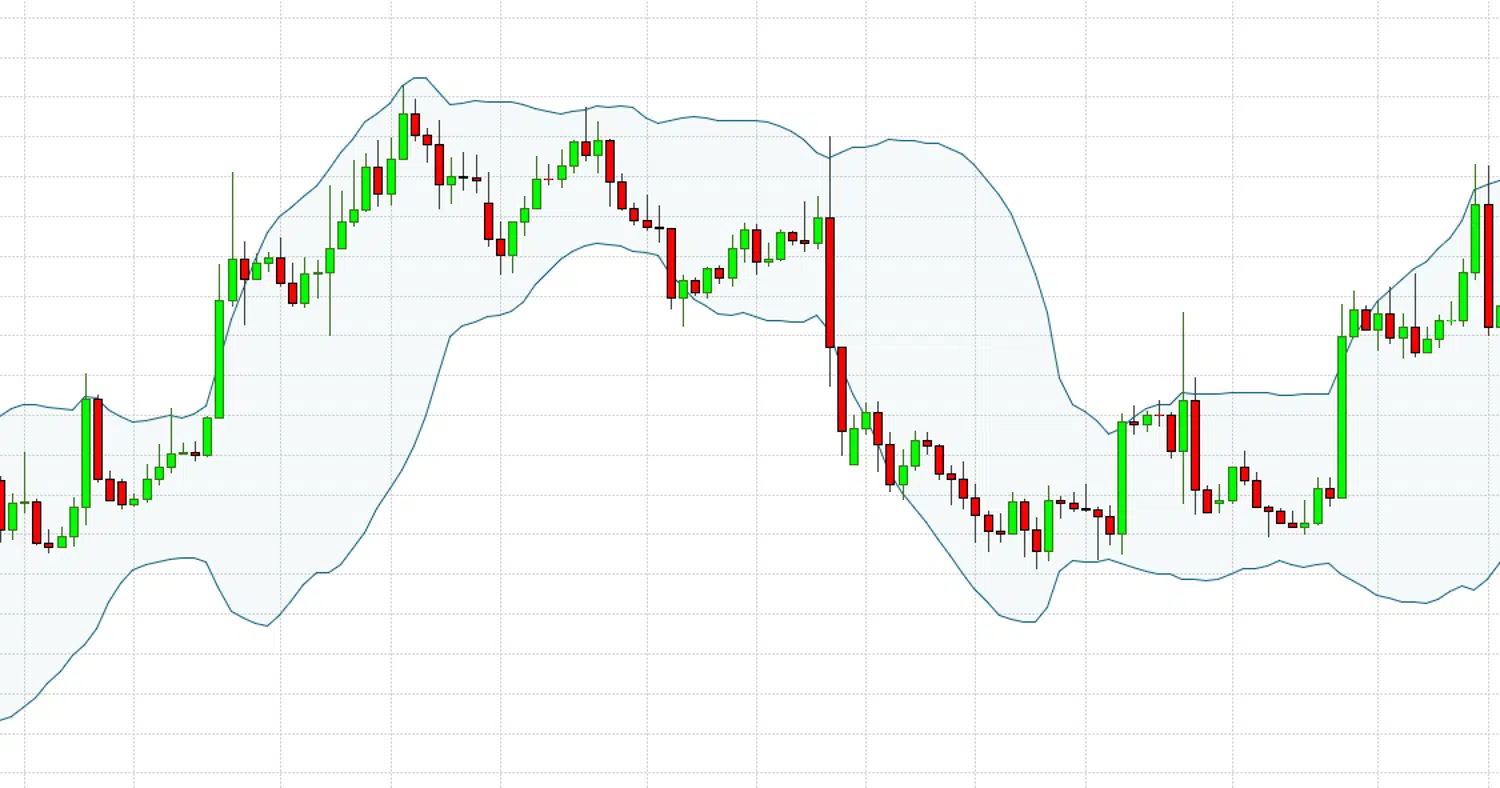
Bollinger bands move in real-time with the price of an asset, providing “guidance” as to what price range the asset should be in based on previous data. One of the most basic applications of Bollinger Bands is scalping when the price reaches either band. If it touches the bottom band, continue long, if it touches the top band, stop short. The trader should preferably hold the trade until the price reaches the opposing band, at which point the market should be ready to reverse course.
However, Bollinger bands do not serve as prison walls. They are instead standard deviations that stretch and restrict around the moving average when the asset’s price and volatility fluctuate. Because the bands track the price’s moving average, the asset’s price is not required to stay along the bands as upper and lower bounds.
The Automatic Stop-Loss
Automated trading robots or “bots” are frequently used by sophisticated high-frequency traders. This has numerous advantages:
Computers trade with no errors, have faster trading speeds, and do not become emotional or switch strategy after a few losses. You may not be able to program your own trading bot just yet, but you may use technology to help you trade.
Some are required to set an automatic stop-loss for each trade. Your stop-loss is the price level at which you direct your futures broker or prop firm to exit the deal at the next available trading price. This technique allows you to limit your losses if a trade unexpectedly goes against you.
By applying such risk management, you may also determine an approximate risk/reward ratio for a transaction ahead of time. Each transaction must have a 6-tick upside potential if you set an automated stop loss of 2 ticks of risk per trade and only accept deals with a 3:1 risk/reward ratio, for example.